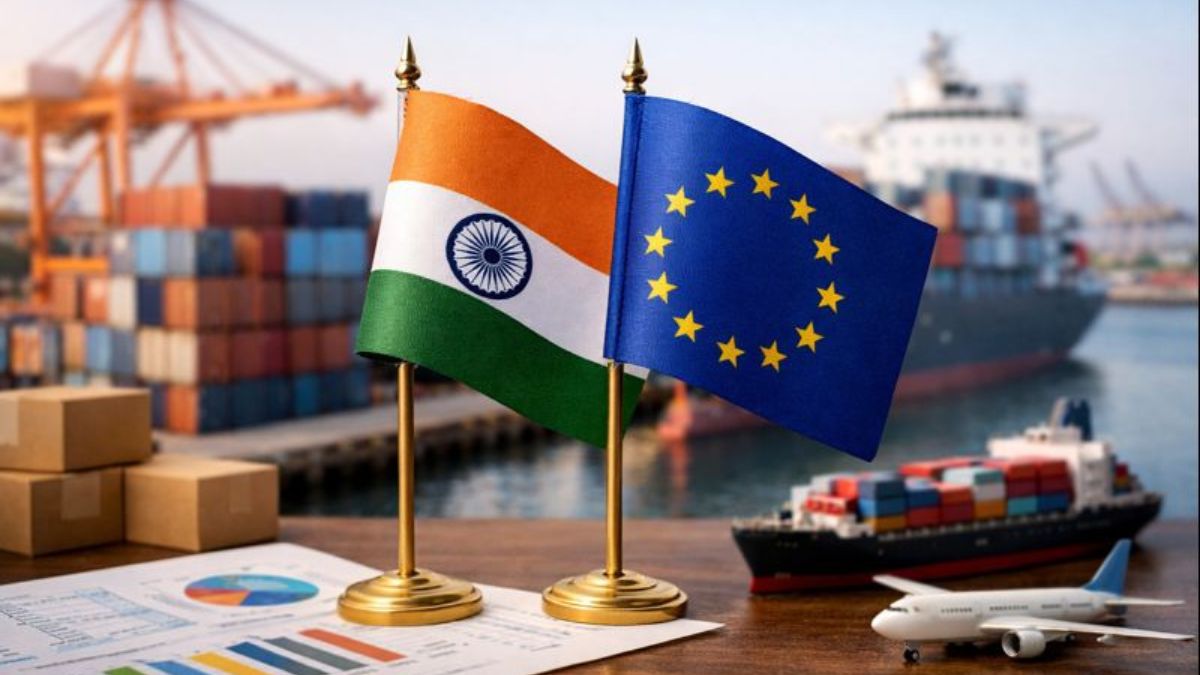
India and the European Union (EU) have finalised a landmark Free Trade Agreement (FTA) after nearly two decades of negotiations, a deal being hailed by leaders on both sides as one of the most significant trade pacts in recent history.
The agreement, concluded on 27 January 2026, is expected to broadly reduce tariffs, deepen economic cooperation, and strengthen India’s role in global trade — covering a market of nearly two billion people and a quarter of global GDP.
What the Deal Covers
According to Reuters and other global news reports, the India–EU FTA includes several key elements:
Major Tariff Reductions
- Tariffs on most goods traded between India and the EU will be eliminated or significantly reduced.
- Indian goods, including textiles, marine products, chemicals and gems, will see preferential access in European markets.
- European tariffs on automobiles, wine and machinery will gradually fall, making many European imports cheaper in India.
- Sensitive agricultural products like dairy, rice and sugar are excluded or subject to longer phase-in periods.
Trade Growth and Market Access
- The deal aims to double trade volumes over the next decade as tariff barriers fall.
- It opens a strategic market worth hundreds of billions in goods and services for Indian exporters.
Services and Regulatory Cooperation
Beyond tariffs, the agreement touches on services, investment protection and regulatory cooperation, promoting easier trade in IT, professional services and capital flows between India and EU economies.
Strategic and Economic Impact
For Indian Exporters
The pact is expected to improve India’s access to one of the world’s largest consumer markets:
- Indian pharmaceutical and medtech firms could benefit from access to the EU’s $572.3 billion market.
- Gems and jewellery exports may grow significantly, potentially doubling in value over the next three years as tariff barriers drop.
- Engineering goods exports are also expected to surge, possibly reaching $25 billion within two years.
For Consumers
Consumers in India are likely to see lower prices on imported goods from the EU over time, including automobiles, consumer goods, wine and chocolates, as tariffs fall or disappear.
Geopolitical and Global Trade Significance
Indian and EU officials have described the FTA as a strategic partnership that goes beyond just trade:
- The deal bolsters India’s global trade presence amid shifting international dynamics and rising protectionism.
- It could prompt other major trade negotiations, including potential discussions with the United States and other partners as India positions itself as a key trade hub.
Timeline and Next Steps
While the deal has been concluded in principle, it still requires:
- Ratification by EU member states and the European Parliament
- Final approvals from the Indian cabinet and legislature
Industry analysts suggest full implementation may take place within the next year, with phased tariff cuts and regulatory adjustments rolling out gradually.
Bottom Line
The India–EU Free Trade Agreement is being called a historic “mother of all deals” by Indian and international leaders due to its scale and strategic depth. With broad tariff reductions, expanded market access and deeper economic cooperation, this pact has the potential to reshape India’s trade landscape, boost exports, enhance consumer choice and further integrate the Indian economy with global value chains.



Great blog! Is your theme custom made or did you download it from somewhere?
A theme like yours with a few simple tweeks would really make my
blog stand out. Please let me know where you got your theme.
Kudos