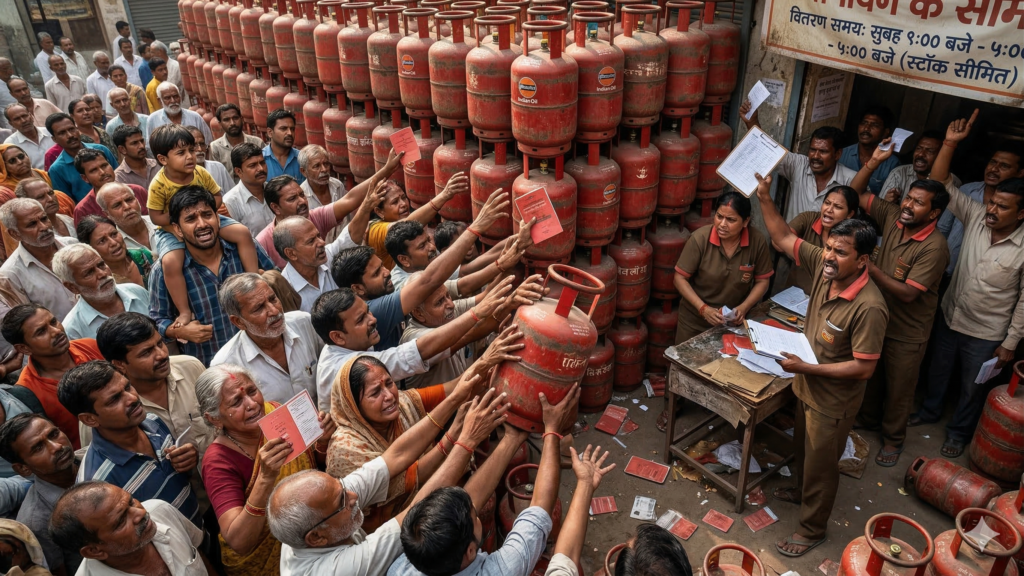
India is currently witnessing a growing LPG crisis in India, with reports of gas cylinder shortages in several major cities including Delhi, Mumbai, Bengaluru, Pune, Chennai, and parts of West Bengal. The disruption in supply comes at a time when the Middle East crisis and tensions linked to the US-Iran-Israel war are affecting global energy transit routes.
Officials say delays in LPG shipments through the Strait of Hormuz, one of the world’s most important oil and gas transit corridors, have created supply bottlenecks that are now impacting domestic distribution across India. As a result, many households and businesses are facing delayed deliveries of LPG cylinders and rising concerns over fuel availability.
The situation has also triggered political reactions, government monitoring, and raids against LPG black marketing, as authorities try to ensure that essential domestic gas supply remains stable.
Why the LPG Crisis in India Is Happening
The primary reason behind the LPG crisis in India is linked to the Middle East crisis impact on LPG shipments. India imports a large portion of its LPG requirements from countries in the Gulf region.
Due to the ongoing US-Iran-Israel war LPG tensions, shipping traffic in the region has slowed down significantly. Many vessels have been delayed or rerouted because of security risks around the Strait of Hormuz transit route.
The Strait of Hormuz handles a large share of global oil and liquefied gas shipments. When tensions escalate in the region, shipping companies often delay or reduce vessel movements to avoid risks. This disruption has directly affected LPG imports that India relies on for domestic cooking fuel.
Industry sources suggest that the slowdown in LPG shipments has resulted in temporary supply shortages in multiple Indian cities, leading to delays in cylinder deliveries and rising demand pressure.
LPG Shortage in Delhi
Residents in the national capital have reported a noticeable LPG shortage in Delhi, with delivery times stretching from the usual 2–3 days to almost a week in some areas.
Local LPG distributors say they are receiving limited stock compared to regular supply levels. As a result, many households have been placed on waiting lists for cylinder delivery.
The government has assured citizens that the shortage is temporary and that domestic LPG supply updates will be provided regularly as new shipments arrive.
Authorities are also monitoring distribution centers to prevent LPG black marketing raids, ensuring that cylinders are not diverted to illegal markets.
Mumbai Facing Gas Cylinder Delays
India’s financial capital has also been affected by the LPG crisis in India, with reports of delivery delays in several neighborhoods.
The shortage has led to increased demand in local markets, and some residents have complained about longer waiting times for LPG gas cylinder price bookings and deliveries.
To address the issue, Maharashtra CM Devendra Fadnavis on LPG supply said that the state government is coordinating with central authorities and oil marketing companies to ensure that the supply chain is stabilized quickly.
The Maharashtra government has also warned against hoarding and illegal resale of cylinders.
Bengaluru and Pune See Supply Pressure
The impact of the LPG shortage is also visible in southern and western cities.
In Bengaluru, several distributors have reported a slowdown in cylinder availability. Customers have been advised to book cylinders in advance due to the supply delays.
Similarly, Pune has experienced increased pressure on LPG distributors as residents rush to secure gas cylinders amid concerns about further shortages.
Officials say the situation remains under control but have urged people to avoid panic buying.
Chennai and West Bengal LPG Supply Updates
Reports indicate that Chennai and parts of West Bengal are also experiencing disruptions in LPG supply.
In Chennai, some restaurants and small businesses have reported difficulties in obtaining commercial LPG cylinders, which are commonly used in the hospitality sector.
Authorities in certain regions have temporarily introduced commercial LPG suspension measures to prioritize domestic households.
Meanwhile, West Bengal LPG supply updates suggest that the state government is working with oil marketing companies to increase cylinder allocation to affected districts.
Political Reactions to the LPG Crisis
The LPG crisis in India has quickly become a political issue as opposition parties and state leaders respond to the developing situation.
The Congress on LPG crisis has criticized the government, accusing it of failing to secure adequate fuel reserves amid global tensions.
Congress leaders have demanded transparency regarding LPG imports and supply management, asking the government to ensure that ordinary households are not burdened by the supply disruptions.
On the other hand, the central government has maintained that the shortage is temporary and primarily caused by global geopolitical tensions rather than domestic policy issues.
Officials have emphasized that India has sufficient reserves and that additional LPG shipments are already being arranged.
Government Action Against LPG Black Marketing
With rising demand and limited supply in certain regions, authorities have intensified action against illegal trade in gas cylinders.
Several LPG black marketing raids have been conducted in cities where reports of unauthorized cylinder sales surfaced.
Officials say strict action will be taken against distributors or traders found diverting domestic cylinders to commercial use.
The government has also urged consumers to report suspicious activities related to LPG sales.
Rise in LPG Gas Cylinder Price Concerns
Another concern among consumers is the possible rise in the LPG gas cylinder price if the supply disruption continues.
Although there has been no immediate price increase announced, experts warn that prolonged disruption in global LPG shipments could eventually impact retail prices in India.
Global energy markets are currently volatile due to the Middle East crisis impact on LPG supply chains, and any extended disruption could affect import costs.
However, the government has assured citizens that it is monitoring international markets and will take steps to protect consumers if necessary.
Some Households Switching to PNG Connections
In some urban areas, households are considering PNG connection switch options as an alternative to LPG cylinders.
Piped Natural Gas (PNG) provides continuous gas supply through pipelines, reducing dependence on cylinder deliveries.
Cities such as Delhi, Mumbai, and Ahmedabad already have expanding PNG networks, and experts say the current LPG crisis could accelerate adoption of piped gas systems.
However, PNG infrastructure is still limited in many parts of the country, meaning LPG will remain the primary cooking fuel for millions of households.
Impact on Businesses and Restaurants
The commercial LPG suspension measures in certain regions have created challenges for restaurants and small food businesses.
Commercial LPG cylinders are essential for hotels, restaurants, and catering services. Limited availability has forced some businesses to adjust operating hours or temporarily reduce services.
Industry associations have requested authorities to ensure separate supply channels for commercial users so that businesses are not severely affected.
What Happens Next?
Energy experts believe that the LPG crisis in India is likely to ease once shipping routes stabilize and more LPG cargo shipments reach Indian ports.
The government is reportedly working with oil marketing companies to increase imports and ensure smoother distribution across states.
Officials have also assured citizens that domestic LPG supply updates will continue, and additional shipments are expected to arrive soon.
For now, authorities are urging people not to panic and to avoid unnecessary bulk bookings of LPG cylinders.
Conclusion
The ongoing LPG crisis in India highlights how global geopolitical events can quickly impact domestic energy supply chains. From Delhi and Mumbai to Bengaluru, Pune, Chennai, and West Bengal, several cities are experiencing gas cylinder shortages due to disruptions linked to the Middle East crisis and Strait of Hormuz transit delays.
While the government is taking steps to stabilize the situation through diplomatic efforts, increased imports, and strict monitoring against LPG black marketing, the crisis serves as a reminder of India’s dependence on global energy routes.
As international tensions evolve, ensuring stable LPG supply and strengthening alternative energy infrastructure will remain key priorities for the country.